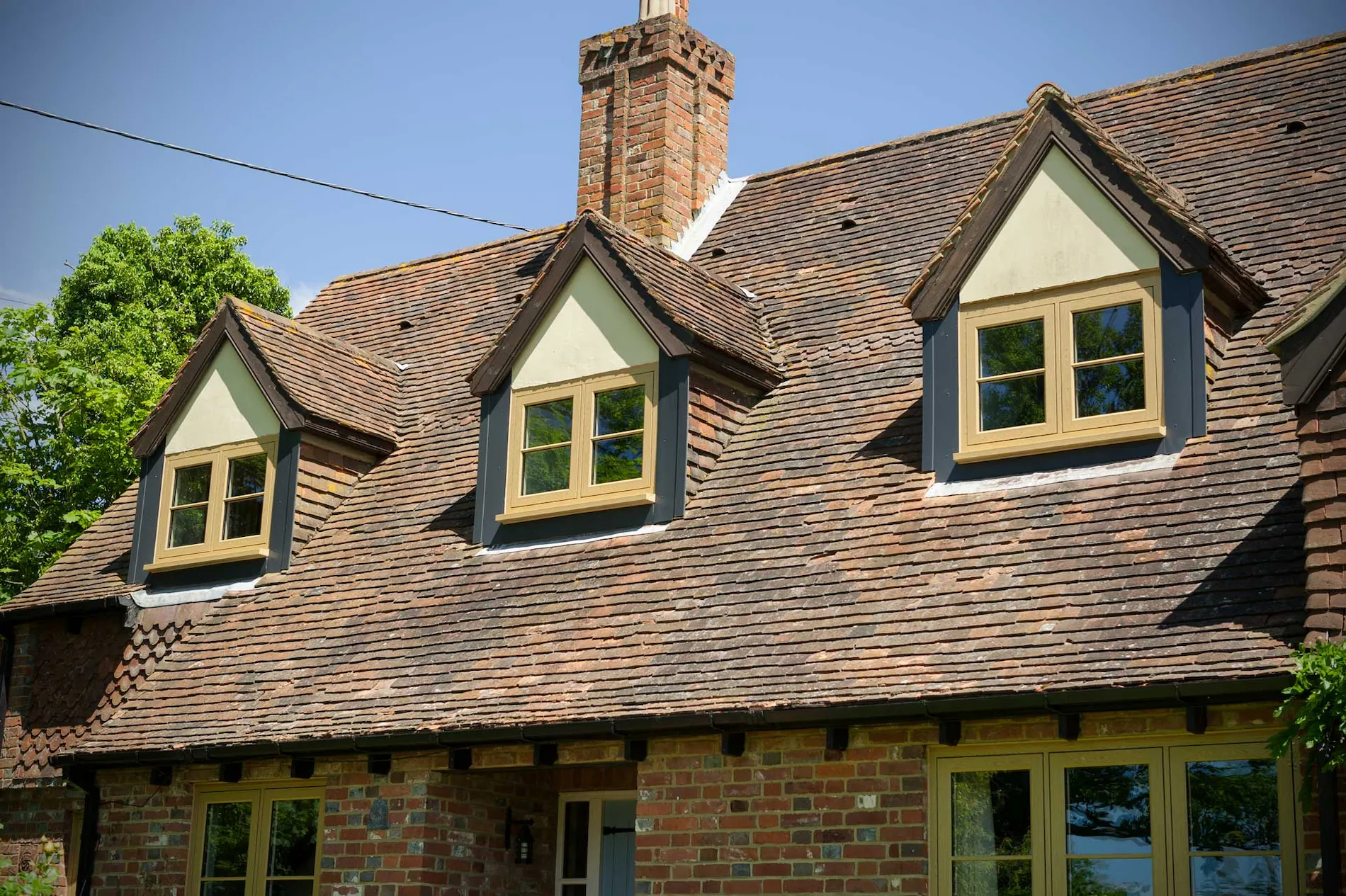

What is a FENSA Certificate and Why Do You Need It When Selling Your Home?
Upgrading your windows and doors is one of the best ways to make your home warmer, quieter, and more secure. But once the new frames are fitted and looking great, there is one crucial piece of paperwork you need to hang onto: your FENSA certificate.
If you are thinking about selling your property or even if you just want peace of mind about your home improvements, understanding what a FENSA certificate is (and why buyers’ solicitors always ask for it) will save you plenty of hassle down the road.
In this guide, the team at GHI Windows breaks down everything you need to know about FENSA certification, what to do if yours goes missing, and how choosing a certified installer can save you time, stress, and money in the long run.

1. What is a FENSA Certificate?
FENSA stands for the Fenestration Self-Assessment Scheme. Essentially, FENSA lets qualified window and door installers self-certify their own work.
A FENSA certificate is simply official proof that your replacement windows or doors meet key UK Building Regulations. These rules make sure your installation is safe, efficient, and up to code, covering:
- Energy Efficiency: Keeping heat inside your home and lowering energy bills.
- Safety Glass: Using toughened or laminated glass in impact zones (like low windows and doors).
- Fire Safety: Making sure escape windows are large enough to open in an emergency.
- Ventilation: Ensuring proper air flow to prevent damp and mould.
When a FENSA-registered company completes an installation, they register the job directly with FENSA. FENSA then notifies the local council and posts a certificate directly to the homeowner.
2. Why Do You Need a FENSA Certificate When Selling Your Home?
When you list your house for sale, your buyer’s solicitor will carry out standard legal checks. As part of this, you will be asked to fill out a property information questionnaire (known as the TA6 form). This form asks for official proof that any windows or doors replaced since 1st April 2002 comply with Building Regulations.
Your FENSA certificate is the quickest, easiest way to prove it.
If you don’t have one, the buyer’s solicitor will flag it as an issue. This can lead to:
- Conveyancing Delays: Solicitors will have to freeze progress while they ask for alternative proof or arrange extra insurance.
- Last-Minute Stress: Hunting for old paperwork right before you exchange contracts is never fun.
- Requests for Price Drops: Buyers may ask for money off the purchase price or insist you pay for a official building inspection.
Having your FENSA certificate ready when listing your property ensures a smooth, straightforward transaction.
3. How Does FENSA Protect You as a Homeowner?
FENSA isn’t just about administrative tick-boxes – it’s designed to safeguard homeowners from sub-standard workmanship and non-compliant installations.
Here is how the scheme looks out for you:
- Vetted Installers: FENSA regularly inspects registered companies to ensure their work meets high technical standards.
- No Local Council Hassle: FENSA automatically notifies your local council for you, saving you the time and expense of applying for Building Control approval yourself.
- Financial Protection: FENSA-registered installers must offer deposit protection and an Insurance Backed Guarantee (IBG). This means your warranty stays valid even if the installation company ever stops trading.
4. What Happens If You Lose Your FENSA Certificate?
Misplacing paperwork is extremely common – or you might discover that the house’s previous owner never passed the certificate along. Luckily, getting a replacement is quick and straightforward.
If the work was originally completed by a FENSA-registered company, you can replace it in four easy steps:
- Go to the official website at fensa.org.uk.
- Click on the certificate re-order tool.
- Enter your postcode and house number to search the database.
- Order a replacement certificate online for a small fee (around £25). It will arrive in the post within a few working days.
But remember, if the original installer was not FENSA-registered, the job won’t appear in the database.
5. Can You Sell Your Home Without a FENSA Certificate?
Yes, you can still sell your property, but you will need to address the missing paperwork before contracts can be signed.
If your certificate is missing and cannot be reordered, you usually have three choices:

Option A: Apply for a Retrospective Building Certificate
You can ask your local council’s Building Control department to inspect the windows and issue a Regularisation Certificate. Keep in mind that this can be expensive, time-consuming, and carries a risk: if the windows don’t meet regulations, you may be forced to alter or replace them at your own cost.
Option B: Buy Building Regulations Indemnity Insurance
This is the most popular shortcut during a house sale. Either you or the buyer pays a one-off fee (usually between £50 and £150) for an indemnity insurance policy. This protects the buyer and their mortgage lender if the local council ever decides to take legal action over the lack of building consent.
Indemnity insurance covers legal risk it doesn’t actually guarantee that the windows are safe or well-made. Also, if you contact the council to inspect the windows first, you usually won’t be able to buy indemnity insurance afterwards.
Option C: Upgrade to New, Compliant Windows
If your windows are old, drafty, or showing their age, replacing them through a certified installer like GHI Windows solves the legal issue instantly while making your home far more attractive to buyers.
6. Why Choose a FENSA-Registered Installer?
The best way to avoid selling headaches in the future is to pick the right installer today. Choosing a FENSA-registered installer ensures your home improvements are handled by qualified experts who know the regulations inside out.
It also saves you money up front. If you use an unregistered builder, you have to pay your local council directly to inspect and approve the work, which can add hundreds of pounds to your bill.
When you work with GHI Windows, we handle the entire registration process for you. As soon as your installation is finished, we log the details with FENSA so your official certificate is posted directly to your home.
7. Does Every Replacement Window Need a FENSA Certificate?
Not always. While most window and door upgrades need proof of compliance, the rules depend on the type of project:
FENSA Certificates ARE Needed For:
- Replacing existing external windows or doors in residential homes where the main frames are being changed.
FENSA Certificates ARE NOT Needed For:
- New Builds & Extensions: These are signed off as part of the overall building permission for the entire structure.
- Repairs & Maintenance: Replacing broken glass panes, handles, or hinges without replacing the actual window frame.
- Conservatories, Porches & Sunrooms: Exempt as long as they are unheated and separated from your main living space by external doors.
- Commercial Buildings: FENSA only applies to residential properties.
If your job falls outside FENSA, you will still need compliance proof either directly from your local council or through another approved scheme (like CERTASS).
Why Choose GHI Windows?
At GHI Windows, we make home improvements simple by delivering premium double and triple glazing, composite doors, bi-folds, and sliding doors with zero paperwork headaches. As a fully FENSA-accredited installer, we handle your registration seamlessly to ensure 100% Building Regulations compliance, backing every job with robust long-term warranties, uncompromising thermal quality, and dedicated end-to-end service.
Planning a home upgrade? Contact GHI Windows today for your free, no-obligation quote!

- What is a FENSA Certificate and Why Do You Need It When Selling Your Home? - October 19, 2026
- Aluminium vs uPVC Windows: Which Is Best for Modern Homes? - March 10, 2026
- Achieving a Cosy Home Aesthetic: Winter Design Trends in Windows and Doors - November 20, 2025
Categories: Updates